
Introduction to Virtualized Networking
Overall rating: 4.54 Instructor: 4.73 Materials: 4.50 more …
Are you confused by the plethora of virtual-something acronyms like VXLAN, VEPA, VN-Tag or VM-FEX? Would you know which one would be the best choice for a network supporting server virtualization? How about a data center supporting Infrastructure-as-a-Service (IaaS) cloud services?
If you’re a network architect, network designer or a sales/support engineer working in an environment that uses (or plans to use) server virtualization, this one and a half hour webinar is a must-have introduction to intricacies of virtualized networking.
Contents
The webinar covers the following topics:
- Basics of server virtualization and IaaS cloud services;
- Networking requirements of server virtualization solutions;
- Workload (VM) mobility and its impact on the network;
- Large-scale IaaS solutions;
- Multi-tenant isolation;
- Integration of virtualized networking with physical networks.
Basics of server virtualization and IaaS cloud services

The introductory section describes various server virtualization approaches and focuses on the most common one – hypervisor-based server virtualization. It also addresses the need for hardware abstraction that leads to soft switching and depicts various methods used by hypervisor vendors to connect multiple virtual machines running in the same physical server to the outside world.
Workload mobility
The ability to move running virtual machines between physical servers for load optimization or maintenance purposes is one of the major advantages of server virtualization. VM mobility imposes strict requirements on underlying network architecture – source and destination host have to be in the same layer-2 subnet due to the limitations of the TCP/IP protocol stack.
This section describes various solutions to the workload mobility challenge and technologies (EVB/802.1Qbg, VN-Tag, VM-FEX, 802.1Qbh, VM tracer) that can tightly integrate hypervisors and physical networks.
Large-scale IaaS solutions
Simple VLAN-based networks rarely scale to the extent required by IaaS services and although large-scale layer-2 solutions exist in Service Provider environments, the same designs almost never get used in data center networks.
You can use one of the following three approaches when building virtualized networks supporting large-scale IaaS services:
- Integrate hypervisors with Provider Backbone Bridging (PBB) as offered by EVB/802.1Qbg standard;
- Solve the problem on the first-hop networking gear, mapping hypervisor VLANs into PBB services;
- Use MAC-over-IP or IP-over-IP solutions like VXLAN.
All three approaches are described in this section.
Multi-tenant isolation
Isolation between IaaS tenants (or between servers with different security requirements in a private cloud) is almost always a fundamental design requirement. You can solve it with virtual subnet-based isolation (using either VLANs or technologies like VXLAN) or with virtualized firewalls like vShield App from VMware or Virtual Security Gateway (VSG) from Cisco. Both approaches are outlined in this section.
Happy Campers
About the webinar
- I am completely on the Network side of the house and understand what I need to build for Storage/Data replication, but I really never thoroughly understood why. This allowed me to have a coherent discussion with my counterparts in DB and Storage and some of the pitfuls that can occur if we try to cowboy the network design.
- James F hunt
- Great view on infra, Ivan applies common sense (rare super power) on common problems in and around the datacenter. Definitely worth the investment (both in money and time).
- Simon Cornet
- Insufficient emphasis placed upon abstraction of physical resources as a means to virtualisation of networks.
- Etienne-Victor Depasquale
- well worth the investment
- Eric Olson
- A very good introduction to Virtualized Networking. It sets the basics for going into more complicated things. Very clear and visual. Fine.
- Xavier Mesquida
About the materials
- Keep this up!
- Simon Cornet
- (1) In "Scaling VLANs", I doubt that the justification of use of VEPA "some NIC vendors thought that it doesn't make sense to implement a full-blown switch in the NIC like Broadcom did"...etc. I would think that it has to do with filtering and accounting for intra-host traffic using means implemented in the physical switches.
(2) A minor detail: In "Virtual Networking 101", at time stamp 17:32, the phrase "when you move the hypervisor from left to right" needs to have "hypervisor" substituted by "VM".
(3)Please bear with me on two other minor points:
(a) the pronunciation of the word "very" is consistently made to sound like "where-y".
(b) generally, "and so on and so forth" sounds more pleasing than "and so on and so on." - Etienne-Victor Depasquale
Target Audience
If you are a network architect, designer or sales/support engineer considering the move to data center, server virtualization or IaaS technologies, you simply have to attend this webinar.
To attend this webinar, you should be familiar with the basics of layer-2 switching, VLANs, IPv4, IP routing and Internet-related protocols (DNS and HTTP).
Delivery Format
The Introduction to Virtualized Netowrking is a 1,5 hour technical presentation. You can buy its recording immediately; we can also organize an on-site event, where the topics of this presentation are combined with in-depth discussion of other Data Center networking topics that apply to your network.
The Author
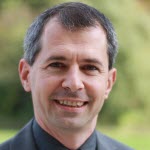 Ivan Pepelnjak, CCIE#1354 Emeritus, is an independent network architect, book author, blogger and regular speaker at industry events like Interop, RIPE and regional NOG meetings. He has been designing and implementing large-scale service provider and enterprise networks since 1990, and is currently using his expertise to help multinational enterprises and large cloud- and service providers design next-generation data center and cloud infrastructure using Software-Defined Networking (SDN) and Network Function Virtualization (NFV) approaches and technologies.
Ivan is the author of several books covering data center technologies, highly praised webinars, and dozens of data center and cloud-related technical articles published on his blog.